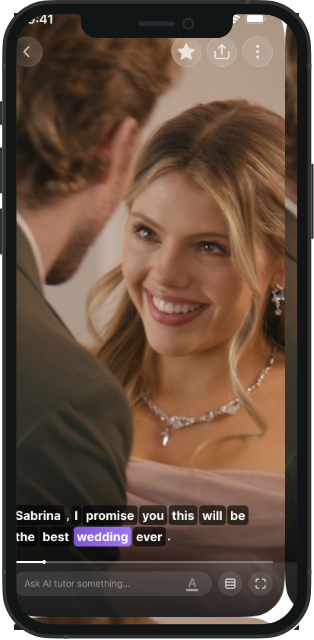
What is a microdrama? Why short-form vertical shows are everywhere (and how to learn a language with them)
Microdramas are short, vertical, bingeable story episodes. Here’s what they are, why they’re addictive, and a simple 3-step loop to learn languages from them.


Microdrama definition
A microdrama is a short, story-driven video episode—usually vertical (phone-first), fast-paced, and designed to be watched in quick bursts. Instead of one long movie-length plot, you get dozens (or hundreds) of tiny episodes.
What makes a microdrama different from TikTok / YouTube Shorts?
Microdramas are:
- Narrative-first: characters + cliffhangers
- Episode-based: short episodes that chain together
- Bingeable: the story structure keeps you watching
Shorts can be story-like, but microdramas are built as serialized fiction.
Why microdramas are so addictive?
- Cliffhangers every 30–90 seconds
- High emotional intensity (conflict, romance, revenge)
- Low friction: you can watch “one more” anytime
How to learn a language with microdramas
Microdramas are great for language learning because they repeat emotional scenarios (apologies, comebacks, flirting, conflict). Here’s a loop that works:
- Watch for meaning (no pausing)
- Capture 5–10 useful lines (the ones you’d actually say)
- Repeat + remix
- repeat the line out loud
- swap one word (tone softens/strengthens)
- reuse it in a new mini-scene
Example: one scene → 10 practice lines
If a character says, “I can’t help you this time,” you can remix:
- “I wish I could, but I can’t.”
- “I’m not available right now.”
- “I can’t commit to that.”
You’re practicing patterns, not memorizing random sentences.
FAQ
Are microdramas the same as short dramas?
They’re a subset: microdramas are shorter, more serialized, and usually vertical.
How long is a microdrama episode?
Often under 2 minutes, but formats vary.
Is it actually good for learning?
Yes—if you turn scenes into repeatable phrase practice. Passive watching alone is entertainment; active remixing turns it into learning.
Try ReelFluent
ReelFluent is built for exactly this: turning short drama scenes into a daily language routine with reusable scripts and practice loops.