Is it legit to learn a language via watching dramas? 7 ways to turn binge time into language input
Stop feeling bad about bingeing. Use these 7 simple habits to turn short dramas into daily English input, build vocabulary, and stay consistent with ReelFluent.


If you love short dramas but feel guilty after watching, you are not alone.
A lot of people enjoy microdramas the same way they enjoy TikTok, YouTube, or a Netflix episode. It is fun, emotional, and easy to keep going. Then the guilt hits: I wasted time again.
Here is the truth: the problem is usually not the drama. It is the lack of a plan.
When you add a few tiny learning habits, the exact same “binge time” becomes English input. And when it becomes input, it is much easier to feel good about it and stay consistent.
This guide gives you 7 simple, realistic ways to watch short dramas without guilt, and turn them into a daily English routine.
Quick answer (start here)
To watch short dramas without guilt, time-box your session and add one tiny learning loop:
- Watch for 10–20 minutes
- Save 3 things you can actually use
- Replay 60 seconds and repeat one line out loud
That is enough to turn entertainment into English input.
Why short dramas feel “guilty” (and why it is fixable)
Short dramas are designed to be addictive. Fast pacing, cliffhangers, and emotional tension make you want “one more episode.”
But guilt usually comes from these two things:
- Unplanned time: you start “for a minute” and suddenly it is midnight.
- No visible progress: even if you heard a lot of English, it feels like nothing “stuck.”
The fix is not to become a perfect student.
The fix is to make your watching intentional and repeatable.
Think of it like this:
- A textbook session is “study first.”
- A drama session is “enjoy first.”
Both can work. The only difference is whether you add a small practice step so you can feel progress.
The 7 ways to turn short dramas into guilt-free English input
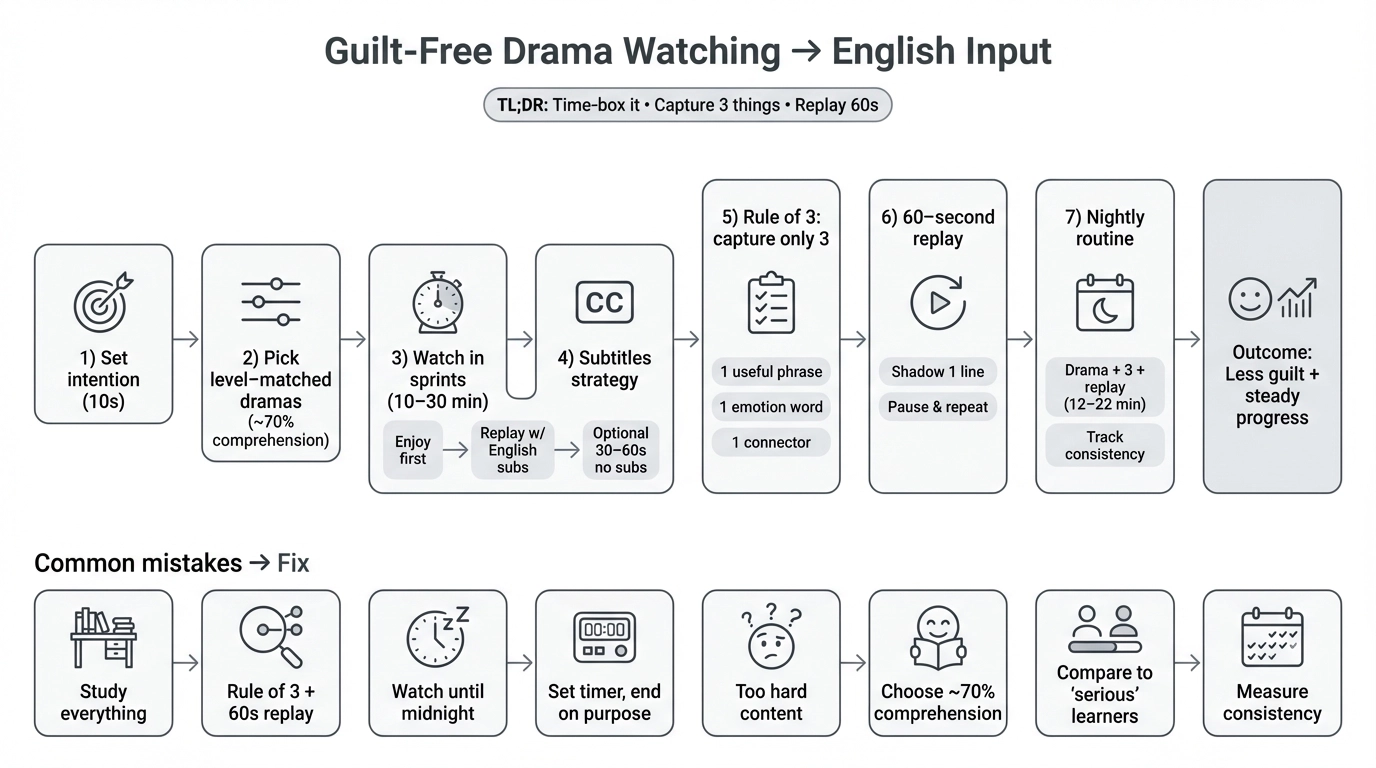
1) Set an intention before you press play
This sounds small, but it changes everything.
Before you start, say one sentence:
- “I am watching for English exposure and enjoyment.”
Then pick one micro-goal for today:
- Listening: notice natural rhythm and pronunciation.
- One useful phrase: capture one line you could say in real life.
- Shadowing once: repeat one line out loud.
A micro-goal keeps you from scrolling mindlessly and helps your brain look for patterns.
2) Pick dramas that match your level
If the show is too hard, you will feel lost. That is not relaxing, and it also makes guilt worse.
A simple rule:
- Choose content where you can understand about 70% with subtitles.
At ReelFluent, our drama series are labeled by CEFR level, so you can pick shows that match your level and your genre preference.
What to look for:
- Clear audio
- Modern everyday dialogue (not historical speeches)
- Recurring situations (arguments, flirting, office tension)
- Short scenes with repeated phrases
When it matches your level, you get the best combination of fun and learning.
3) Watch in short sprints, and end on purpose
This is the most important “anti-guilt” move.
Set a timer before you start:
- 10 minutes (busy days)
- 20 minutes (most days)
- 30 minutes (weekends)
Ending on purpose does two things:
- It protects your time.
- It gives you a clean mental “win” instead of the feeling of getting dragged along.
If you always “accidentally” watch longer than you want, try this trick:
- Stop right before the next episode starts, even if it is a cliffhanger.
That creates a natural stopping point and makes it easier to return tomorrow.
4) Use subtitles strategically (do not fight them)
A lot of learners feel guilty because they “depend on subtitles.”
Do not. Subtitles are a tool.
Use a simple progression:
- Round 1: subtitles that keep you engaged (native language or bilingual). Enjoy the story.
- Round 2: English subtitles for a short replay of one scene.
- Round 3 (optional): no subtitles for 30–60 seconds.
This way you get both:
- Comprehension (so it stays fun)
- Sound-to-text connection (so it becomes learning)
5) Capture only 3 things (not 30)
Most people fail here because they try to “study everything.”
That turns a fun habit into homework.
Use the Rule of 3:
- One useful phrase / sentence you would actually say
- One emotion word (annoyed, relieved, embarrassed, jealous)
- One connector that makes you sound natural (actually, honestly, even though, by the way)
Where to store it:
- Notes app
- A simple list in Notion
- Or inside ReelFluent, where Moments are built in: each episode is labeled with key quotes so you can practice sentence building and collocations.
6) Do a 60-second replay to lock it in
If you do only one “study” step, do this one.
Pick a short clip (one exchange) and replay it.
Then do one of these:
- Repeat one line out loud (shadowing)
- Pause and repeat word-by-word once
- Record yourself (optional, once per day)
This creates the feeling of progress that kills guilt.
It also trains your speaking muscles, not just passive listening.
7) Turn it into a nightly routine you can keep
Consistency beats intensity.
Here is a routine that works for entertainment-first learners:
- Watch a short drama (10–20 minutes)
- Capture 3 things
- Replay 60 seconds
Total: about 12–22 minutes.
Anchor it to an existing cue:
- After dinner
- On the commute
- Before bed
If you want to track it, track consistency, not hours.
For example:
- “Did I do my drama + 3 + replay today?”
That is a win.
Example guilt-free routines
The 15-minute routine (busy days)
- 12 minutes watch
- 2 minutes capture 3 things
- 1 minute replay and repeat one line
The 30-minute routine (most days)
- 20 minutes watch
- 5 minutes capture 3 things + quick notes
- 5 minutes replay 1 scene twice + shadowing once
The weekend routine (longer sessions)
- 2 x 20-minute sprints with a break
- After each sprint: capture 3 things + 60-second replay
- End the session on purpose, even if you want more
How ReelFluent makes this easier (without making it feel like studying)
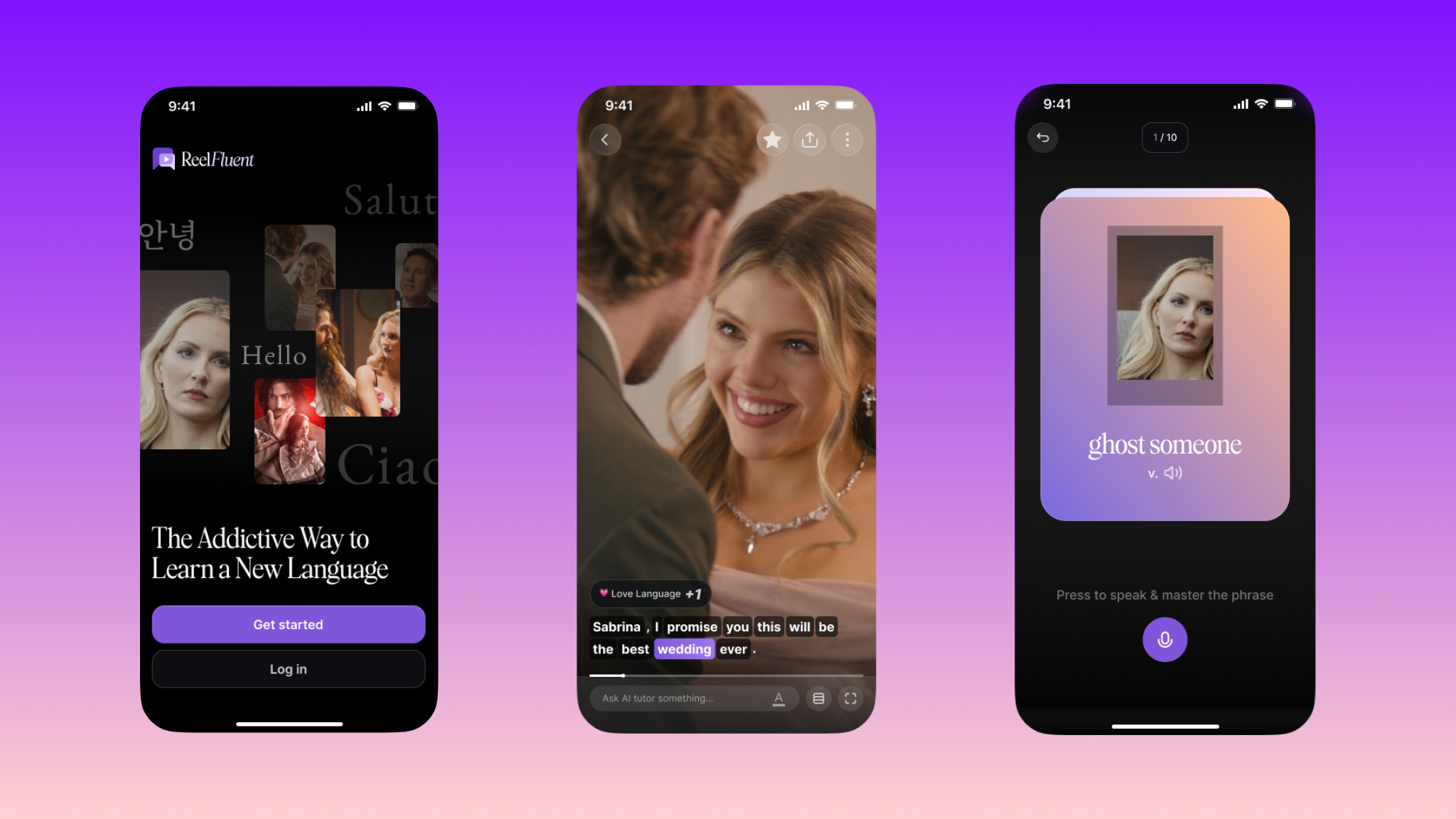
If you like the short-drama format but want a smoother “learning loop,” ReelFluent is built for exactly this.
With ReelFluent, you can:
- Watch short dramas designed for learners
- Save memorable “golden phrases” from scenes
- Replay short moments so phrases stick
- Build a nightly habit that feels like entertainment, not homework
The goal is not to be perfect. The goal is to be consistent.